










Dubai Corporate Tax 2026: Free Zone vs Mainland Companies
The reasons were obvious:
- Strategic global location
- Fast company formation
- Modern infrastructure
- 100% foreign ownership in many sectors
- And, most importantly, a highly favorable tax environment
From freelancers and startups to multinational corporations, businesses worldwide viewed the UAE as a gateway to growth.
But in 2026, one question continues to dominate conversations among entrepreneurs:
“Has corporate tax changed the advantages of starting a business in Dubai?”
The answer is yes, but not in the way most people expect.
Corporate tax has not made Dubai less attractive.
It has simply made business structuring more important than ever.
Understanding UAE Corporate Tax
The UAE introduced Corporate Tax to align with international standards while maintaining its position as a globally competitive business hub.
Under the current UAE Corporate Tax framework:
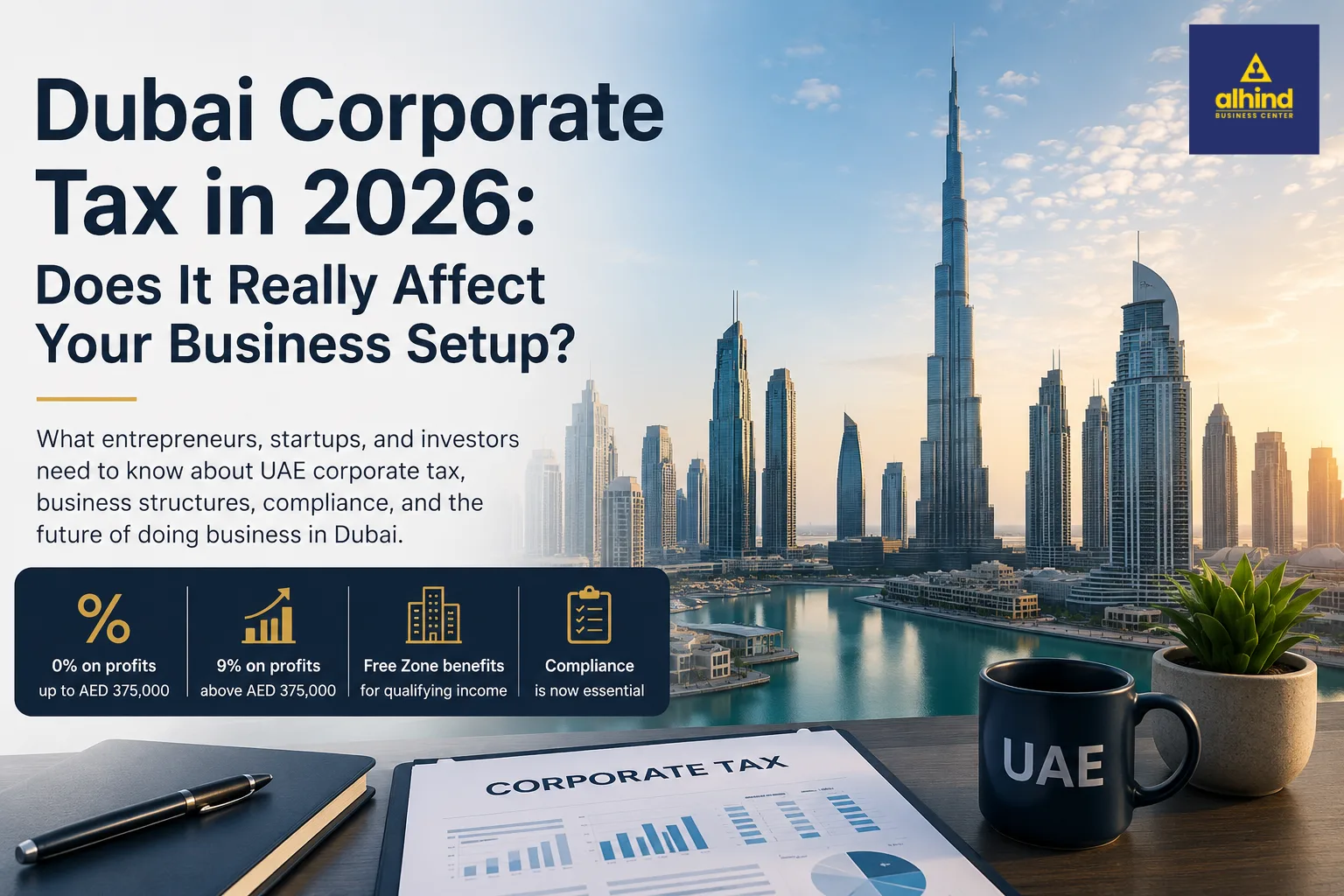
- Taxable profits up to AED 375,000 are taxed at 0%
- Taxable profits above AED 375,000 are taxed at 9%
- Certain qualifying Free Zone companies may still benefit from 0% tax on qualifying income
- Businesses are required to maintain accounting records and submit annual tax filings
Compared to many countries where corporate tax rates range between 20% and 30%, the UAE remains one of the most tax-efficient jurisdictions in the world.
Before Corporate Tax: The Old Business Setup Mindset
Before Corporate Tax was introduced, most entrepreneurs focused mainly on:
- Licensing costs
- Visa allocations
- Office requirements
- Banking options
- Speed of setup
Tax planning was rarely part of the conversation because the UAE operated in an almost tax-free environment.
The most common question used to be:
“Which setup is the cheapest and fastest?”
Today, that mindset is changing rapidly.
In 2026, Business Structure Matters More Than Ever
The introduction of Corporate Tax has shifted attention from simple company formation to long-term business structuring.
Entrepreneurs today must think strategically from the very beginning.
1. Free Zone vs Mainland: A Critical Decision
One of the biggest decisions entrepreneurs now face is choosing between a Free Zone company and a Mainland company.
A Free Zone entity may qualify for favorable tax treatment if it meets the required conditions and complies with UAE regulations.
A Mainland company, on the other hand, offers broader access to the UAE market but may fall under standard corporate tax obligations depending on taxable profits.
The right structure depends on several factors:
- Your target customers
- Revenue sources
- Nature of business activity
- Future expansion plans
- International operations
Choosing the wrong structure early can create unnecessary tax exposure and operational limitations later.
This is why many entrepreneurs are now seeking professional guidance before setting up their businesses in the UAE.
2. Proper Accounting Is No Longer Optional
Corporate Tax has transformed accounting from a simple administrative task into a core business requirement.
Companies operating in the UAE now need:
- Accurate bookkeeping
- Financial statements
- Revenue tracking
- Expense documentation
- Audit-ready records
Businesses with organized financial systems will find compliance relatively straightforward.
However, companies relying on informal bookkeeping or incomplete records may face significant challenges as regulations continue to evolve.
For example, a freelance consultant earning below AED 375,000 annually may effectively pay 0% Corporate Tax while remaining compliant.
Meanwhile, a growing trading company generating larger profits may require advanced accounting systems and proper tax planning from day one.
3. Tax Registration and Compliance Are Essential
A common misconception is that businesses with low profits do not have compliance obligations.
Get Alhindbc Dubai’s stories in your inbox
Many UAE businesses are still required to:
- Register for Corporate Tax
- Maintain financial records
- Submit annual tax returns
- Follow reporting requirements
Compliance is now a standard part of operating a professional business in Dubai.
Has Regional Conflict Changed Dubai’s Tax Environment?
Some investors wonder whether recent geopolitical tensions in the Middle East have impacted the UAE’s corporate tax policies.
So far, the answer is largely no.
The UAE continues to maintain a stable and predictable economic environment focused on:
- Foreign investment
- Regulatory transparency
- Economic diversification
- Long-term business growth
While regional events may influence global markets and investor sentiment, they have not fundamentally changed Dubai’s long-term business strategy.
Why Dubai Still Remains One of the Best Business Destinations in 2026
Despite the introduction of Corporate Tax, Dubai continues to offer major advantages for entrepreneurs and investors.
Strategic Global Position
Dubai connects Europe, Asia, and Africa, making it one of the world’s strongest international business hubs.
Competitive Tax Environment
A 9% Corporate Tax rate remains among the lowest globally.
Business-Friendly Regulations
The UAE continues simplifying company formation, foreign ownership rules, and licensing procedures.
Access to Global Talent
Dubai attracts professionals, investors, and entrepreneurs from around the world.
World-Class Infrastructure
From logistics and banking to technology and transportation, Dubai provides an ecosystem built for business growth.
The Real Impact of Corporate Tax
The biggest misconception about Corporate Tax is that it has reduced Dubai’s appeal.
In reality, the UAE is evolving into a more mature and globally aligned business environment.
The businesses succeeding in 2026 are the ones focusing on:
- Choosing the right structure
- Maintaining strong accounting systems
- Understanding compliance requirements early
- Planning long-term growth strategically
The era of “set up first and figure it out later” is ending.
The era of strategic company structuring has begun.
Why Many Entrepreneurs Work With Business Setup Consultants
With Corporate Tax, compliance, licensing, banking, and structuring becoming more interconnected, many entrepreneurs now prefer working with experienced business setup consultants.
Companies like AlhindBC help entrepreneurs navigate:
- Free Zone vs Mainland setup decisions
- Company formation procedures
- Trade licensing
- Visa processing
- Corporate Tax registration
- Compliance support
- Banking assistance
For first-time founders and international investors, professional guidance can help avoid costly setup mistakes and ensure the business is structured correctly from the beginning.
Final Thoughts
Dubai’s appeal was never only about paying zero tax.
It has always been about opportunity, speed, global access, and a business-friendly ecosystem.
Corporate Tax has not removed those advantages.
Instead, it has created a business environment where planning, compliance, and smart structuring matter more than ever.
For entrepreneurs who understand the new landscape, Dubai remains one of the most attractive places in the world to build and scale a business.
The opportunity is still massive.
The difference today is simple:
Success is no longer just about starting a company.
It is about structuring that company correctly from day one.
Disclaimer: UAE Corporate Tax regulations may evolve over time. Businesses should seek professional legal, accounting, or tax advice tailored to their specific activities and structure.
Need help with your Dubai Corporate Tax 2026?
Contact Alhind Business Center today or visit our office in Al Qusais, Dubai, for expert assistance.